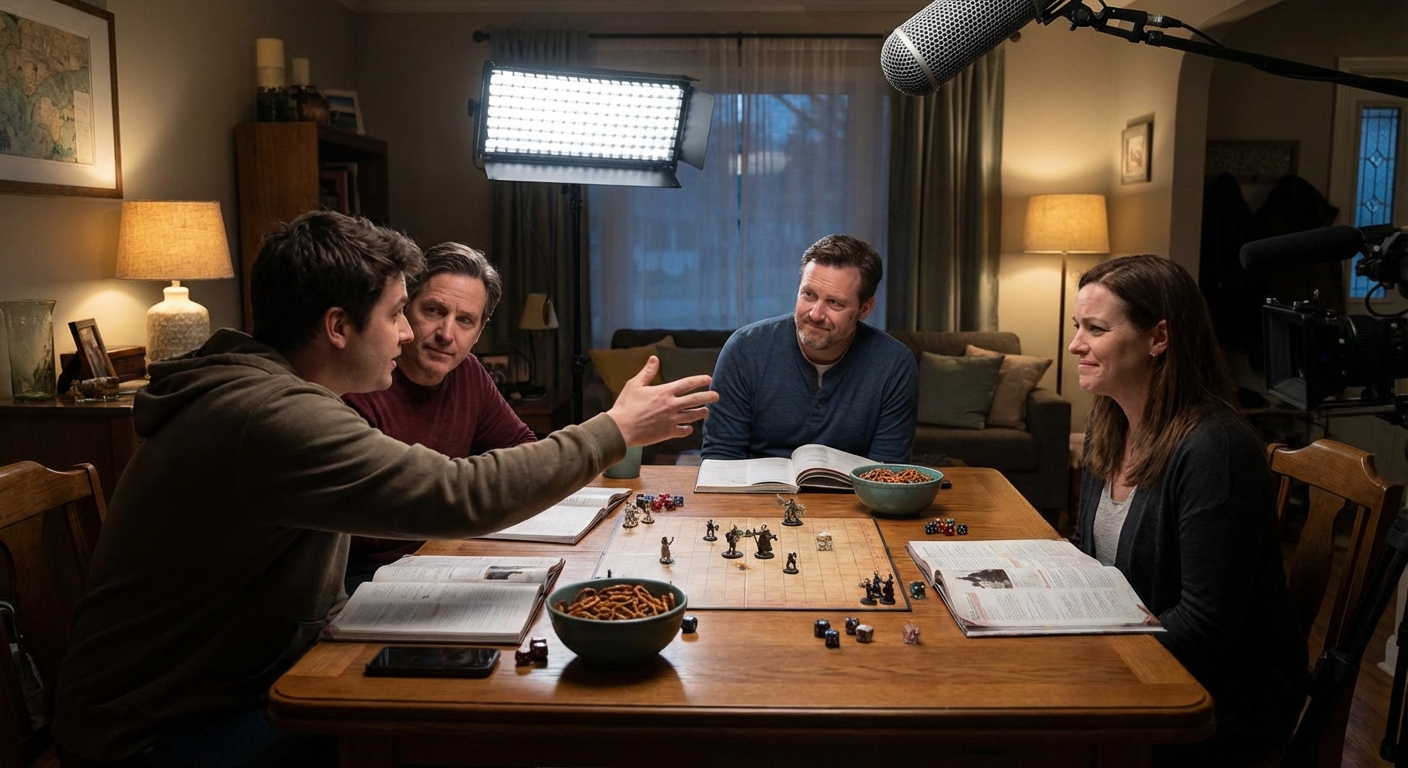
Publishers finally got the memo: not every serious strategy game needs a coffin box and 300 minis. The latest wave of new releases includes a quiet revolution — compact titles with real depth, designed to live in your bag and hit the table fast.
The Rise of Pocket-Sized Crunch
These aren’t fillers pretending to be gamers’ games. They’re legit strategy designs streamlined into tiny footprints.
Let’s look at four standout new releases:
- Ripple Effect – spatial engine in 20 cards
- Merchant’s Ledger – economic duel in a wallet
- Signal Relay – cooperative puzzle in a small tin
- Roads to Ruins – micro area‑control with big nastiness
We’ll break down how they play, key strategies, component realities, and who they’re actually for.
Ripple Effect: A 20-Card Engine-Builder That Shouldn’t Work (But Does)
Pitch: Draft and arrange multi‑use cards into a 3×3 grid where each placement triggers neighboring powers.
How It Plays
- Each card shows two effects: one if played horizontally, one vertically.
- On your turn: draft a card, place it in your grid, trigger adjacent effects.
- Game ends when someone completes their 3×3; most points from card synergies wins.
- Positioning is everything. You’re not just playing a good card; you’re sculpting chains.
- Early game: seed your grid with flexible, low‑risk effects (resource gain, mild scoring).
- Mid game: lock in anchors — cards whose effects you want to trigger repeatedly.
- Late game: treat last placements like a combo explosion; misplacing one card can cost 10+ points.
- Engine density (lots of small triggers)
- Mega combos (few, but huge multi‑trigger turns)
Strategic Depth
Players quickly realize they can play for:
Both are viable, which is shocking for such a small design.
Components & Production
- 20 tarot‑sized cards, thick and linen‑finished
- Minimal iconography, mostly text — very readable
- Comes in an absurdly small tuckbox that actually fits in a pocket
- Deep tactical puzzle in 15–20 minutes
- Zero setup time; teach in under 5
- Ideal "just one more" game
- No table presence; visually muted compared to flashy big boxes
- Card draw can mildly steer strategies (though all are usable)
- At 3–4 players, downtime creeps in with thinky folks
Pros
Cons
Best for: 2‑player weeknight duels and convention hallway games where you want a real think in minimal space.
Merchant’s Ledger: Wall Street Knife Fight in a Wallet
Pitch: A head‑to‑head economic duel where you manipulate three markets using only 18 cards and a few cubes.
How It Plays
- There are three goods (grain, iron, spices), each with its own mini market track.
- Players alternate playing action cards that manipulate prices, buy/sell goods, or mess with the opponent.
- The twist: every card can be played for its market effect or its personal ability, not both.
Strategic Texture
This feels like a knife‑edge micro version of big economic games:
- You’re constantly choosing between short‑term profit and long‑term leverage.
- Bluffing matters: feigning interest in a good to draw your opponent into a bad trade.
- End game is tense: the last few cards can flip market standings entirely.
- Tempo spending: sometimes taking a sub‑optimal trade earlier denies your opponent the perfect setup.
- Information control: track which market cards are likely spent; exploitation windows emerge late.
Key strategies:
Components & Production
- Credit card–sized wallet folio
- 18 cards, wooden cubes for player stock and shared prices
- Rules are concise but dense; first read may take two passes
- Genuine economic feel in 20–30 minutes
- Hugely portable; lives in your everyday bag
- High skill ceiling once both players know the deck
- Not friendly to casual players; the game punishes sloppy timing
- First game can feel random until you see the card set once
- Pure duel — no scaling beyond 2 players
Pros
Cons
Best for: Dedicated 2‑player partners who love tight economic brinkmanship without the overhead of a full Brass session.
Signal Relay: Co-op Brain Burn in a Mint Tin
Pitch: Cooperative logic puzzle where players, as deep‑space techs, must relay signals across a failing network using limited communication.
How It Plays
- Shared grid of node cards with paths and signal modifiers
- Each player holds a small hand of command cards (rotate, swap, boost, dampen)
- On your turn, play a command to adjust the network, then send a signal from a starting node
- The team must route specific signal strengths to designated endpoints before the deck runs out
Crucially, players have restricted table talk about exact card contents. You discuss plans in general, but not specific icons.
Strategic Complexity
- Early game: establish "language" — agreed conventions for what certain plays usually mean.
- Mid game: anticipate teammate intentions based on their limited options.
- Late game: sacrifice some objectives to nail the hardest routes before the clock expires.
Reminiscent of The Crew and Hanabi, but with more spatial manipulation.
Components & Production
- Metal tin about the size of a mint box
- Small square cards; decent stock, non‑linen
- Iconography is good once learned, but the first few games need the reference card handy
Pros
- Fantastic for co‑op puzzle lovers
- Scenario deck provides escalating challenges
- Scales well from 2–4; puzzle tightens with more players
Cons
- Will absolutely fry the brains of players who dislike constrained communication
- First scenario is still fairly tough; not very "gateway"
- Art is utilitarian; you’re here for the puzzle, not the theme
Best for: Groups who loved The Crew and want something harder, or couples who enjoy collaborative brain workouts.
Roads to Ruins: Area Control With a Mean Streak
Pitch: 15–25 minute area control game in a micro box, with open scoring and brutal edge‑case plays.
How It Plays
- Tiny map of ancient roads connecting ruin sites
- Players alternate placing or moving influence tokens along roads
- Each ruin scores differently (majority, presence, or adjacency bonuses)
- After a fixed number of turns, tally points; highest total wins
There’s zero randomness after setup. Every choice is public.
Strategic Hooks
- Opening: secure flexible road intersections that can influence multiple ruins.
- Mid game: identify which ruins are effectively "locked" and shift to more open fronts.
- End game: precision strikes to flip a majority or deny adjacency scores.
This is sharper than it looks. A single move can:
- Flip a majority
- Block an opponent’s only path into a region
- Open a backdoor scoring opportunity
Components & Production
- Fold‑out mini board, wooden cubes/discs
- Rulebook is shorter than most Kickstarter stretch goal lists
- Box is only slightly larger than a standard deck of cards
Pros
- Fast, vicious, and highly replayable
- Great for multiple rematches in a row
- Surprisingly good at 3 players, excellent at 2
Cons
- Thin margins mean newcomers can get demolished
- No randomness means repeated pairings can develop "solved" openings
- Extremely abstract; theme is mostly wallpaper
Best for: Players who enjoy Go‑like positional battles and don’t mind that this thing has sharper elbows than its small box suggests.
Why These Compact Releases Matter
This new wave of small‑box strategy games isn’t just cute. It fixes real hobby problems:
- Setup fatigue: At the end of a long day, you’re more likely to reach for Ripple Effect than a 3‑board behemoth.
- Space constraints: Not everyone has a dedicated game room; these live comfortably in apartments and backpacks.
- Time windows: 20–30 minute games that still hit the strategic itch are golden.
They also make excellent sideboard options on heavy game nights. While two players grind through a big Euro, others can knock out three rounds of Merchant’s Ledger nearby.
Which One Belongs in Your Pocket?
- Choose Ripple Effect if you love engine‑building puzzles and clever card positioning.
- Choose Merchant’s Ledger if you want a serious economic duel that you can play in a cafe.
- Choose Signal Relay if your group enjoys tight co‑op puzzles with limited communication.
- Choose Roads to Ruins if you crave mean, pure strategy in 20 minutes.
These compact new releases prove that depth doesn’t need a giant box or a miniature budget. If your shelves are groaning under too many unplayed big games, maybe it’s time to let the small boxes do the heavy lifting.