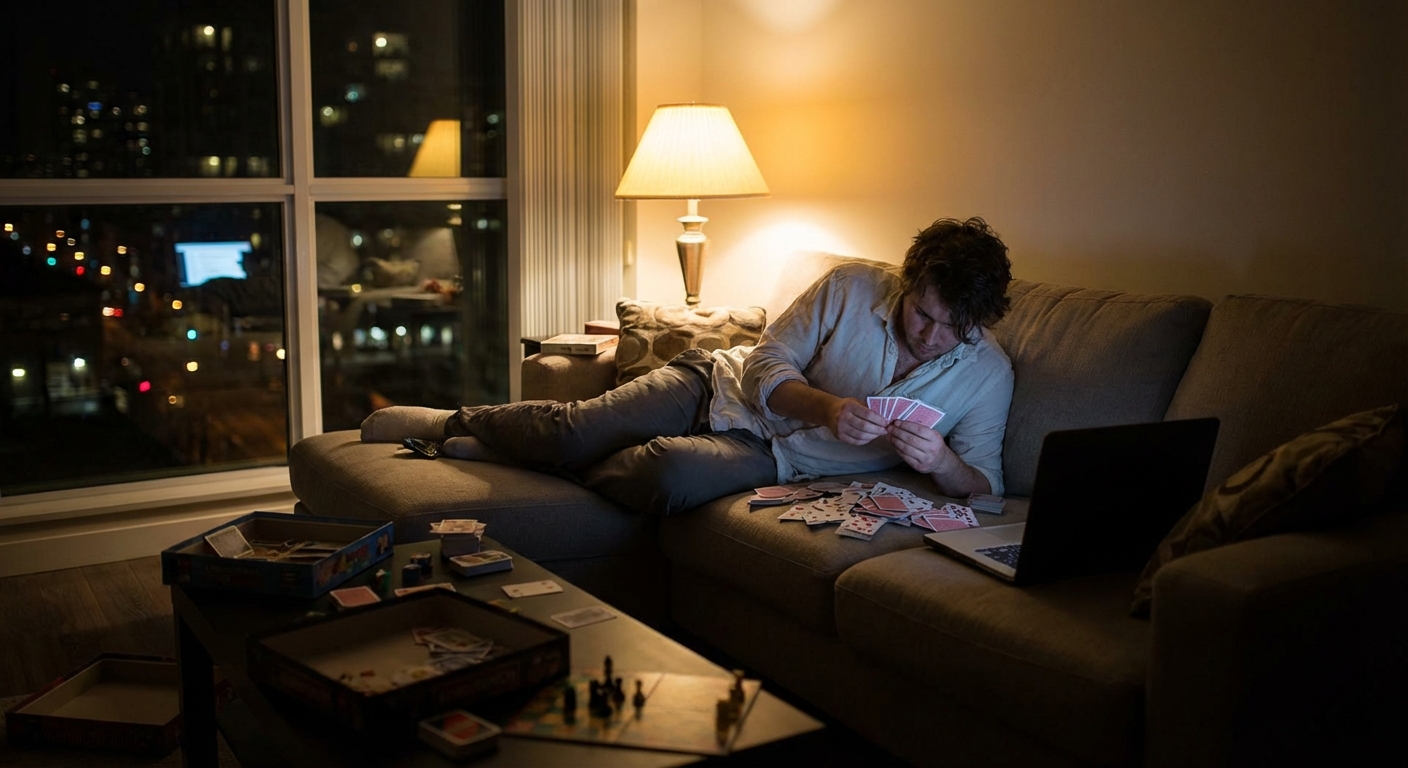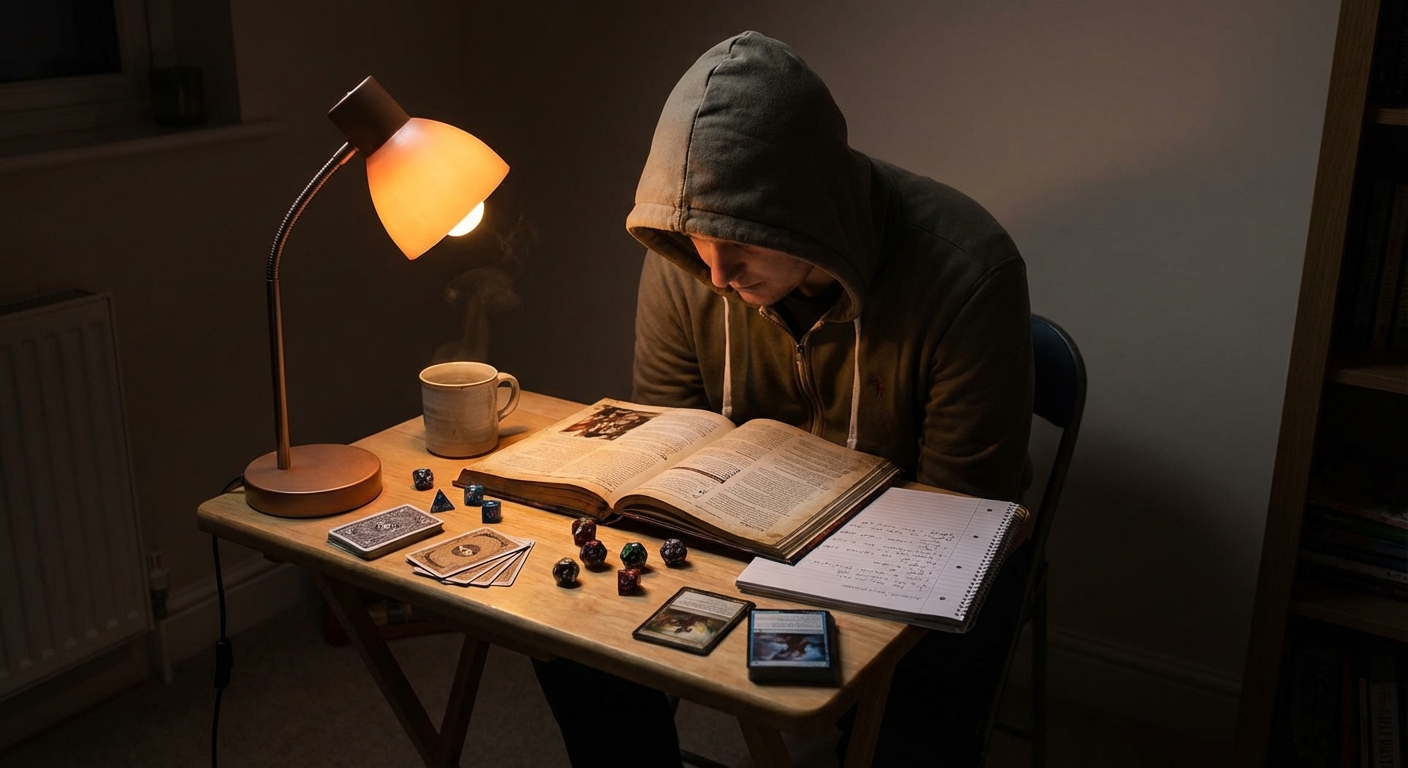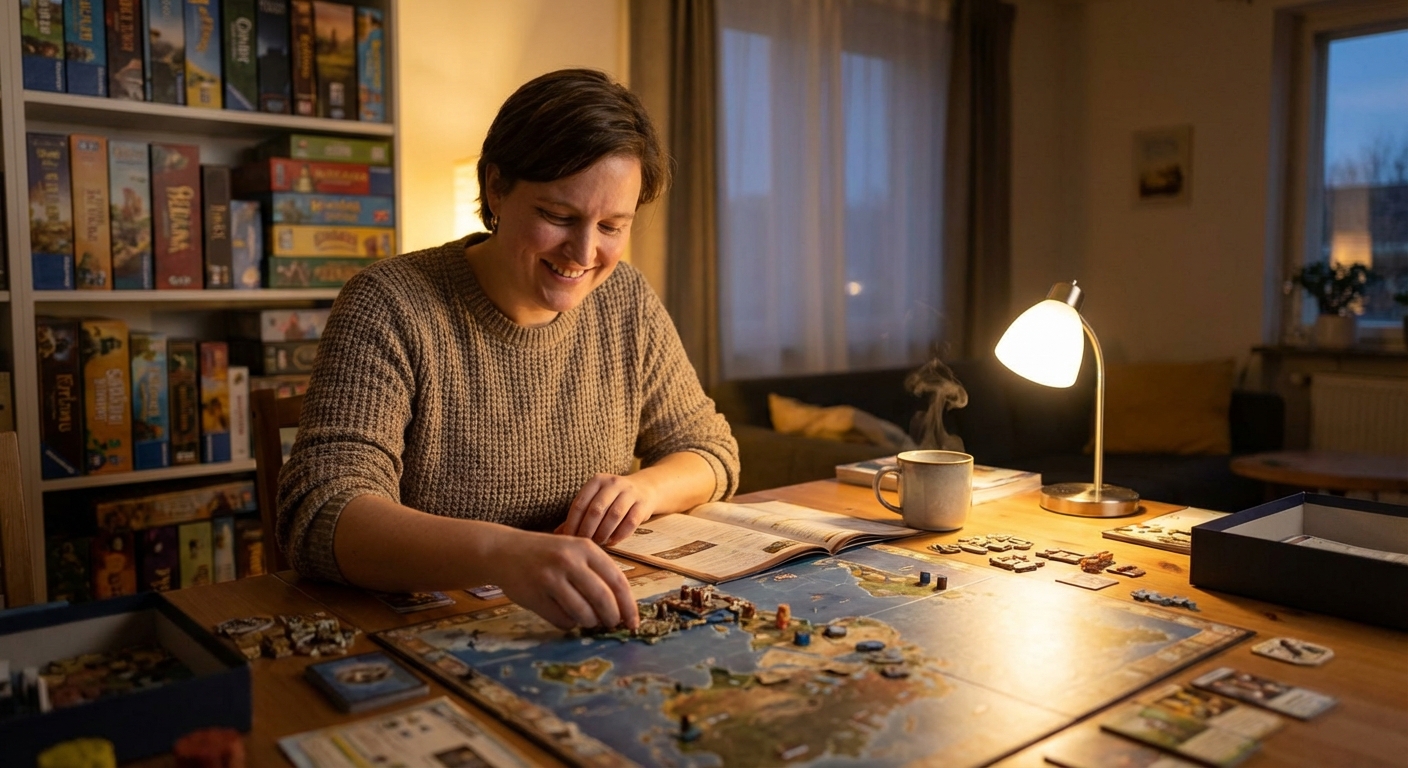
Solo board gaming has finally escaped the "sad gamer" stereotype. It’s no longer the emergency backup when your group cancels; it’s a primary way to experience games—with tighter pacing, deeper immersion, and absolutely zero quarterbacking.
Why Solo Play Deserves a Seat at the Table
If you’re a dedicated hobbyist, solo play isn’t a downgrade. It’s a different discipline: part puzzle solving, part narrative immersion, and part self-inflicted challenge mode.
This article digs into why solo play is uniquely satisfying, which designs shine alone, and what to look for in components, systems, and difficulty tuning.
What Makes a Great Solo Game?
Not every box that says “1–4 players” actually works well at 1. A great solo game usually nails these elements:
1. Low Administrative Overhead
You’re both player and AI, so every extra token shuffle matters.
- Good: Under Falling Skies, Warp’s Edge – compact, minimal upkeep.
- Bad: Multiplayer games that bolt on a 12-step automa flowchart just to simulate a second human.
- Streamlined enemy turns
- Few, meaningful decision points per round
- Clear iconography that keeps “AI thinking” time under control
Look for:
2. Tension Without Hidden Information
In solo, you’re not bluffing anyone. The tension has to come from:
- Tight resource curves (e.g., Spirit Island’s time pressure)
- Risk management (e.g., Nemo’s War die rolls vs. mitigation tools)
- Long-term planning (e.g., Ark Nova cards and action cooldowns)
Hidden information can still exist (face-down decks, unrevealed tiles), but it should be meaningful uncertainty, not busywork.
3. Meaningful Loss States
If you win 90% of your solo plays, you’re probably playing the wrong games.
Great solo systems:
- Have clearly defined lose conditions that approach quickly
- Offer difficulty scaling via scenarios, modules, or challenge modes
- Make losing interesting—you learn where the engine broke
- Aeon’s End lets you scale nemesis difficulty and market randomness
- Sprawlopolis’s score targets force you to play better, not just longer
Examples:
Game Systems That Shine Solo
Puzzle-Forward Euros
Games that feel like intense spreadsheets with other humans become razor-sharp puzzles solo.
Standouts:
- Coffee Traders (with fan solo or official variants) – Brain-melting logistics where you’re optimizing routes and timing without table talk.
- A Feast for Odin (official solo rules) – Tetris meets worker placement; solo removes analysis paralysis and lets you experiment.
- Low interaction in multiplayer anyway
- Most tension is internal to your engine
- Automa (if any) just provides tempo pressure, not personality
Why they work:
Narrative & Campaign Games
If you love RPGs, solo board campaigns can be the physical, tactile cousin.
Standouts:
- Gloomhaven / Frosthaven – Actually easier to manage pacing solo; you control the whole party and avoid rules debates.
- Nemo’s War – A masterclass in thematic integration: your decisions feel like captain’s logs.
- You control the pace of the story
- No spoilers from ahead-of-you group members
- Emotional continuity across multiple sessions
Why they work:
Dedicated Solo Designs
Some games were born solo and it shows.
Standouts:
- Under Falling Skies – Dice placement plus escalating alien threats, designed from the ground up for one.
- Final Girl – A horror movie in a box with crunchy, tactical choices.
- Every component serves the solo loop
- Rules are tight and focused
- No “fake multiplayer” cruft
Common traits:
Component Quality: What Matters More in Solo
When you’re alone at the table, you touch everything and you do all the work. Component quality directly affects fatigue.
Clarity > Bling
- Icons: Clear, intuitive icons reduce rulebook trips.
- Fonts: Tiny, fancy fonts kill solo campaign games faster than bad balance.
- Player aids: A single, robust solo reference sheet is gold.
Setup & Teardown
If setup takes 30+ minutes, you’ll play less—and solo is already fighting your shelf of shame.
Great solo designs:
- Use modular boards that snap together intuitively
- Offer save systems for campaigns (e.g., tuck boxes, labeled bags)
- Keep enemy decks/boards compact and easy to reset
Physical Ergonomics
You’re doing all the moving, shuffling, and tracking.
Look for:
- Dual-layer player boards that keep cubes in place
- Card quality that survives frequent shuffling
- Distinct colors for pieces (you can’t ask a friend: “is that blue or purple?”)
Strategy Tips for Getting More Out of Solo Plays
1. Play Aggressively Early
Many solo systems are tuned assuming players will turtle. Punish the design by:
- Prioritizing tempo: early card draw, engine pieces, or map control
- Taking calculated risks with dice or card flips when your loss downside is low
You’ll discover the real difficulty ceiling faster.
2. Run Mini-Experiments
Solo shines for iterating strategies:
- Try 3 back-to-back plays using different opening lines
- Log your scores or turns-to-victory to see which approach scales
You’re basically doing self-directed meta-analysis.
3. Embrace Rules Mastery
In group play, you may fudge a rule “to keep things moving.” Solo is the lab.
- Re-read tricky sections mid-campaign
- Keep a dedicated solo rules notebook
- Check FAQs/errata between sessions
The payoff: you become the rules sage in your group, and your solo games get sharper.
Pros & Cons of Solo Board Gaming
Pros
- Always available: No scheduling, no cancellations.
- Pure signal: Your decisions aren’t diluted by group dynamics.
- Rules lab: Safest environment to fully learn complex games.
- Flexible pacing: Pause for 20 minutes, come back later; nobody cares.
Cons
- No social high: You won’t get that shared table energy.
- Analysis spiral: Without social pressure, you can overthink every move.
- Setup reluctance: Big-box games can feel like a chore to start.
- Limited meta variety: You’re playing against yourself and the system, not a field of playstyles.
The Mindset Shift: Solo as a Primary Mode
Stop treating solo as a consolation prize. Treat it like:
- A design stress test – Does this game hold up when stripped of table banter?
- A personal skill ladder – Can you beat higher difficulties or harder scenarios?
- A narrative playground – Can you immerse fully without social noise?
The best solo experiences are as rich and demanding as any tight 3–4 player session—just honest about where the tension comes from.
So the next time someone calls solo play “sad,” smile, shuffle your carefully sleeved decks, and enjoy beating a design that doesn’t care how charming your table talk is.
You’re not missing out.
You’re playing a different game.