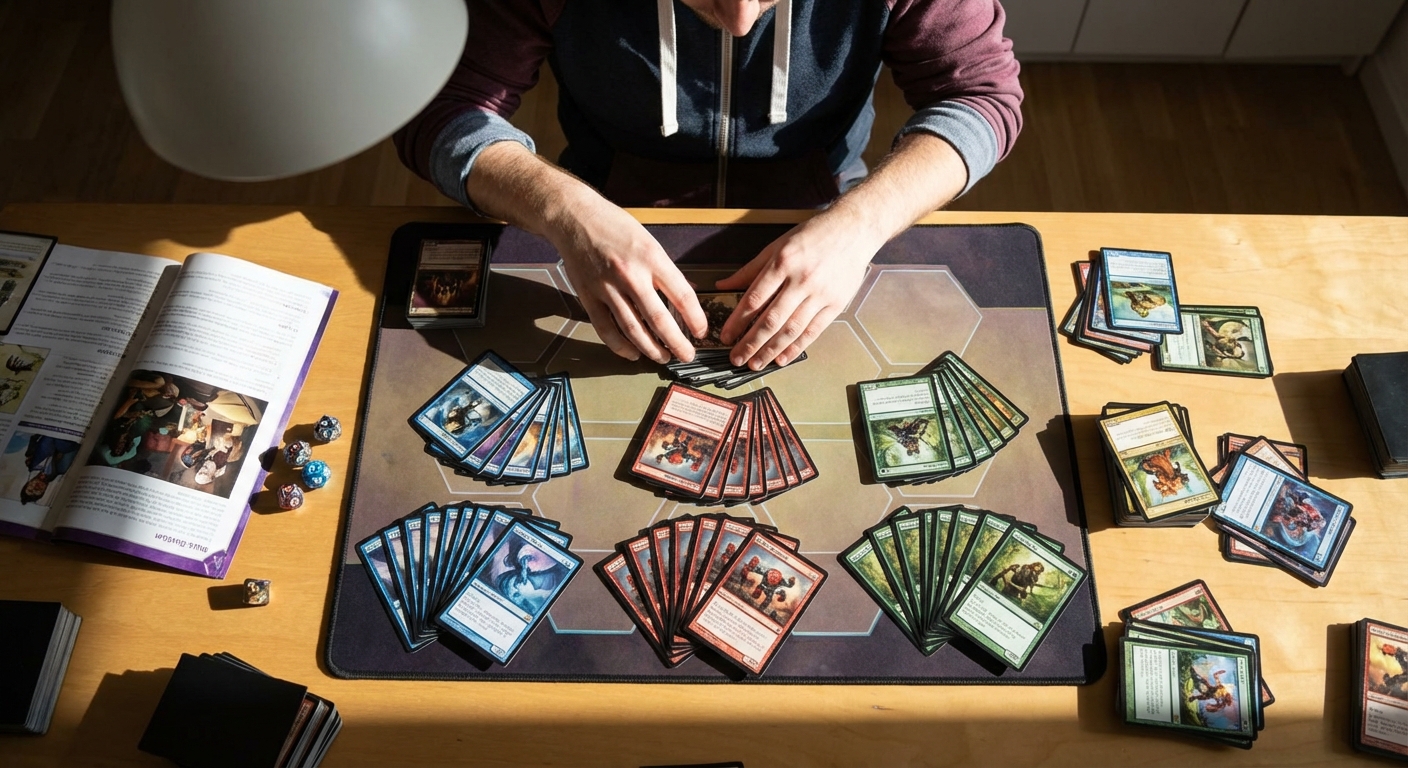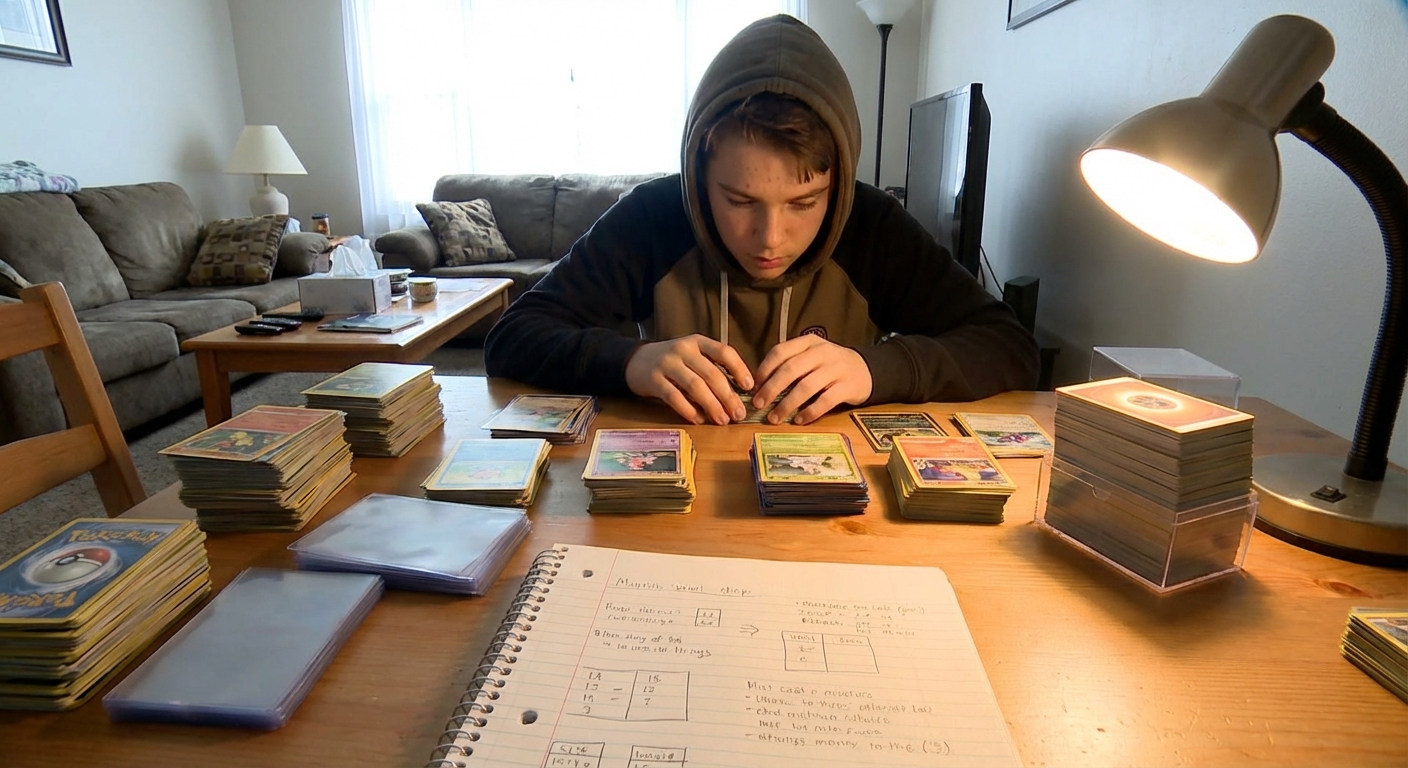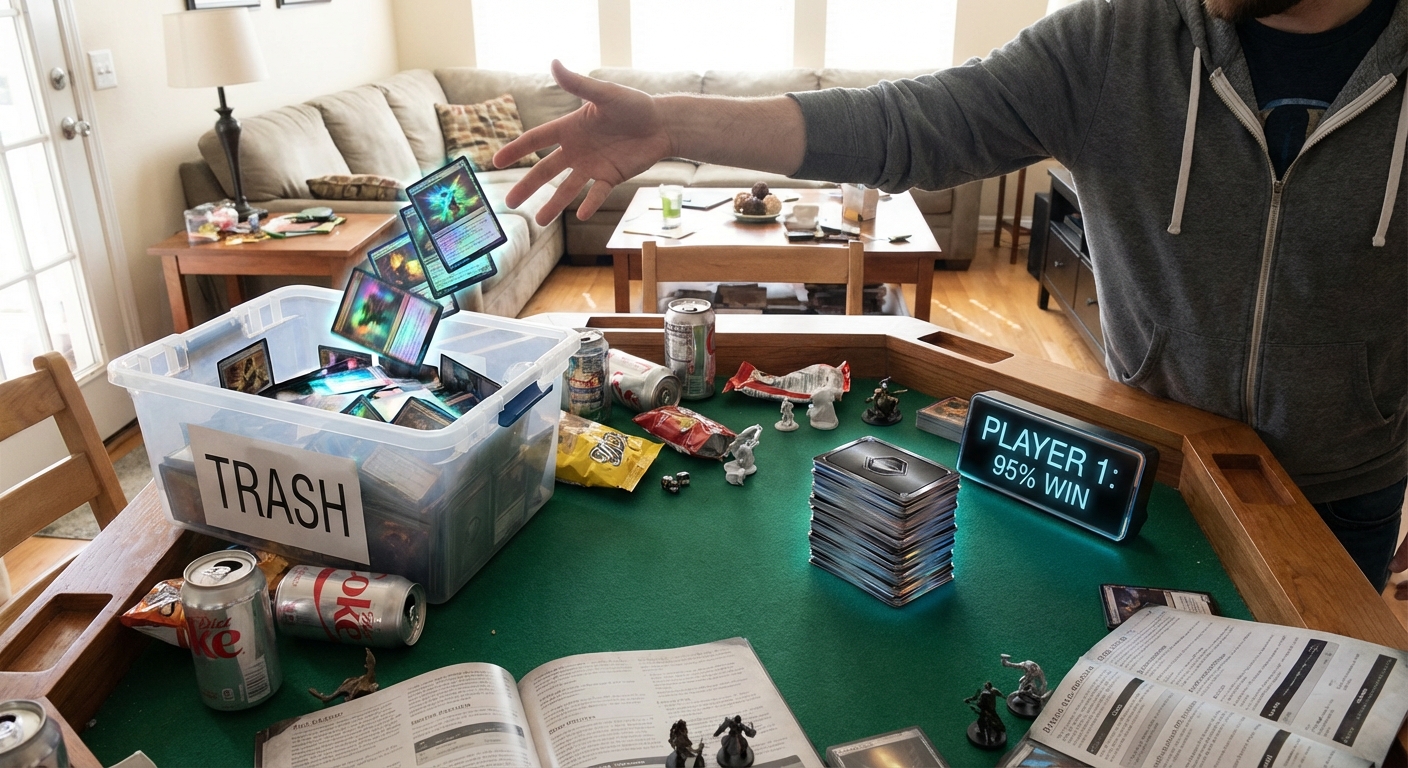
Deck-building isn’t just “buy cards, draw cards.” At higher levels, it’s tempo math, probability management, and brutal efficiency. When a deck-builder sings, it feels like piloting a finely tuned engine where every card drawn is exactly what you wanted two turns ago.
Why Deck-Building Still Slaps
This article dives into advanced strategy for deck-building aficionados—think Dominion, Clank!, Dune: Imperium, Aeon’s End, Star Realms, and their offspring. We’re assuming you already know how a market row works. Let’s talk about winning.
Principle #1: Trashing Is Not Optional
If your deck-builder offers trashing, culling, thinning—whatever term it uses—it’s not a cute side option; it’s the spine of your engine.
Why Trashing Is So Strong
- Increases card quality density: Every time you remove a weak card, your strong cards appear more often.
- Speeds up cycling: Smaller deck = more cycles through your key combo.
- Future-proofs your buys: Late-game gold that shows up once every six turns is functionally dead.
Rule of thumb: If a game has trashing and you’re not doing it aggressively, you are probably losing.
What to Trash First
- Pure Junk: Curses, wounds, starter coppers, scouts—anything that doesn’t advance your plan.
- Outdated Economy: Once your deck produces more than you can meaningfully spend in a turn, start thinning excess money.
- Early Crutches: Draw or +Buy cards that got you going but no longer fit your engine.
In Dominion, a Chapel opening is infamous because it lets you deploy this philosophy brutally fast. Many modern designs soften trashing, but the relative value is almost always still sky-high.
Principle #2: Economy vs. Payload vs. Cycling
Think of your deck as three systems:
- Economy: How you generate resources (coins, power, persuasion, etc.).
- Payload: How you convert those resources into points, attacks, or game-winning effects.
- Cycling: How quickly you see the cards you bought.
Many players over-invest in economy and under-invest in cycling.
Balancing the Three
Early game:
- Focus: Economy + a bit of cycling.
- Goal: Earn enough to buy your first big payload cards.
- Focus: Cycling + deck shaping.
- Goal: Draw more of your best cards more often.
- Focus: Payload and end-game triggers.
- Goal: Turn your economic advantage into actual victory.
Mid game:
Late game:
In Star Realms, this means not just buying big damage ships, but also grabbing scrapping cards that thin your deck so you can loop those ships constantly.
Principle #3: Know Your Game’s Clock
Every deck-builder has a clock:
- Dominion: Province pile and 3-pile endings.
- Clank!: Dragon track and dungeon escape.
- Dune: Imperium: VP race and Imperium Row depletion.
- Aeon’s End: Nemesis deck and gravehold health.
Aggro vs. Engine vs. Hybrid
Depending on the clock, you choose a posture:
- Aggro / Rush: Small, fast deck that scores quickly, often ignoring long-term efficiency.
- Engine: Slower start, but explosive turns later.
- Hybrid: Early pressure with a light engine layered on.
If the opponent is clearly building an engine, a compact rush strategy that ends the game before their engine pops might be correct—even if your turns look worse in isolation.
Key question every few turns:
If I buy another engine piece now, will I get to use it enough times before the game ends to justify the cost?
If the answer is no, start grabbing payload.
Principle #4: Market Row Discipline
Market rows tempt you with shiny nonsense. Stop buying cool cards and start buying correct cards.
Evaluate Cards by Your Current Deck, Not in a Vacuum
Ask:
Does this synergize with what I already do well?
Does this fix a weakness my deck has? (Draw, trashing, economy, scaling)
How many times will I realistically see this before the game ends?
A card that looks strong but doesn’t slot into your build is a trap. In Dune: Imperium, that one expensive card with insane text might actually be worse than a cheaper, faction-aligned card that cleanly fits your current path to 10 VP.
Principle #5: Respect Component Design
Good deck-builders leverage their physical components to support strategic clarity.
What to Look For in a Well-Produced Deck-Builder
- Clear iconography: Can you parse card effects at a glance when fanned? (Marvel Legendary often fails here; Dune: Imperium largely nails it.)
- Card backs & quality: Thin, easily marked cards ruin the game; deck-builders demand serious shuffling. Linen finish and good stock extend life.
- Layout for quick scanning: Costs, card types, attack icons, and triggers should live in consistent spots.
From a strategy standpoint, clean graphic design reduces cognitive load so your brain can focus on tempo and probabilities instead of deciphering art.
Sleeving might be optional in a worker-placement game; in a deck-builder, it’s practically an expansion.
Principle #6: Information Management and Memory
High-level play silently tracks:
- Deck composition: How many starters left? How many key cards?
- Discard timing: When will your reshuffle happen relative to current buys?
- Opponent’s capabilities: In PVP deck-builders, what can they do next turn?
Practical Expert Habits
- Count reshuffles: Before buying, ask, “Will this card enter my next hand or the one after?”
- Track key cards: Mentally note if your best draw card is already in your discard.
- Watch enemy tells: In Star Realms, if they’ve scrapped down to a 12-card deck with 4 big damage ships, you can estimate average damage output per hand.
When to Break the Rules
Strong players know the principles; great players know when to ignore them.
You might skip heavy trashing when:
- The game is ultra-short and trashing is too slow.
- The trashing is tied to a weak card that clogs turns.
- The game rewards massive turn spikes (e.g., big-point cards that need huge spend in one shot).
- Denial is powerful: keeping it away from an opponent’s synergy is worth it.
You might over-buy economy when:
You might buy a “bad” card when:
Final Thoughts: Build the Deck, Not Just a Pile of Cards
Deck-building mastery is less about recognizing “good cards” and more about:
- Understanding the game’s clock.
- Aggressively shaping deck composition.
- Honoring tempo and cycling.
- Staying ruthlessly on plan.
The next time you shuffle up, don’t ask, “What’s the coolest card in the row?” Ask:
What does my deck want to be doing on its best turn, and what gets me there fastest?
That’s how you turn a starter junk pile into a lean, terrifying machine.