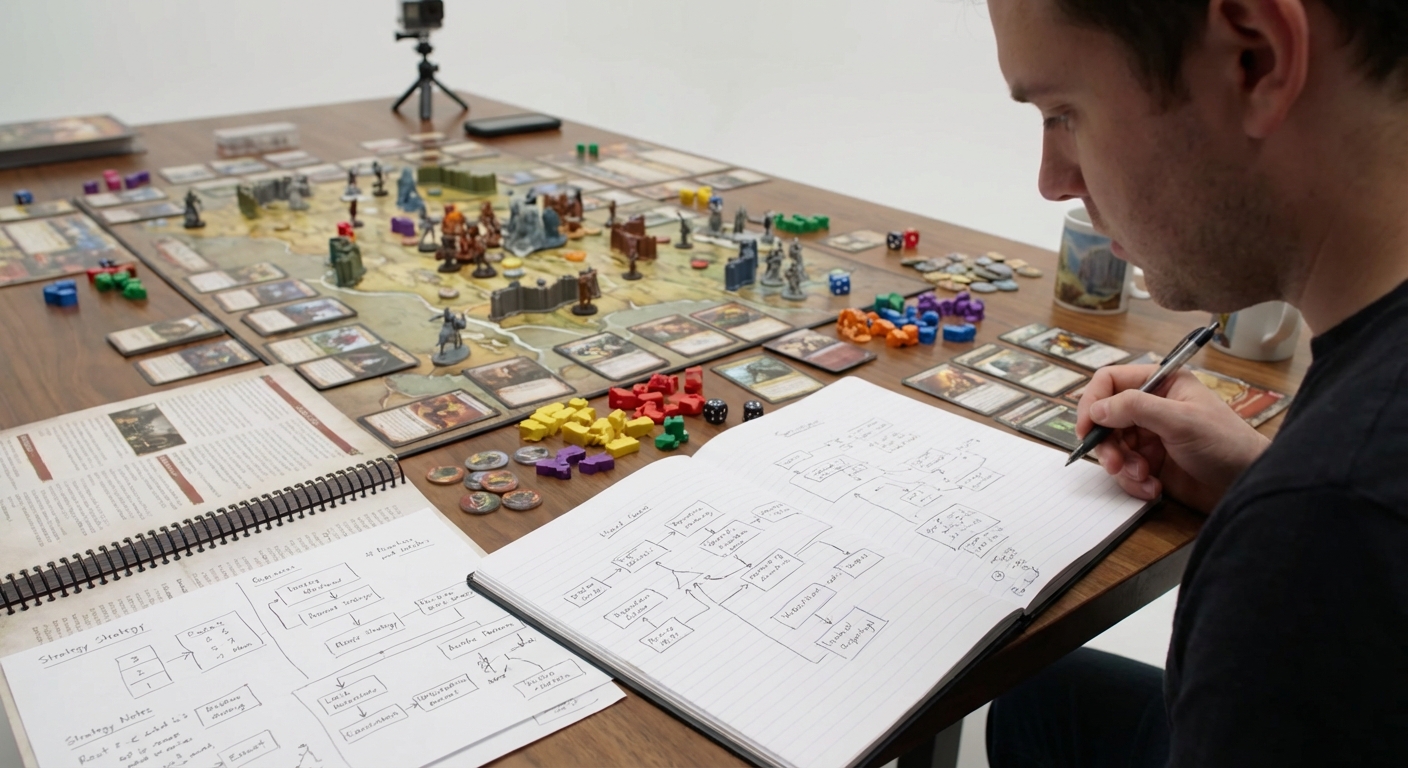
Asymmetry is the secret sauce of modern board games. Factions in Root, corporations in Terraforming Mars, clans in Blood Rage, houses in Dune: Imperium—they’re why you keep replaying the same box instead of opening another shrink wrap.
Faction Strategy: Where the Real Depth Hides
But most official rulebooks barely scratch the surface of how to play each faction well. That’s where faction‑focused strategy guides come in.
If you want to contribute something genuinely useful to the community—or just analyze your own favorite faction like a pro—here’s a concrete blueprint for writing sharp, evergreen faction guides.
Step 1: Start with the Faction’s Core Identity
Your first mission: explain what the faction actually is, not just what it can technically do.
Break this into three parts:
Win Condition Emphasis
- Does this faction win by points, control, tempo, or snowballing advantage? - Are they racing, stalling, or leeching off others?
Resource Profile
- What do they generate easily? Cards, money, actions, units, special tokens? - What are they bad at, or must pay extra for?
Skill Ceiling & Onboarding
- Is this a training‑wheels faction or a high‑AP, high‑reward monster?
In a polished guide, this becomes your "Faction at a Glance" box at the top.
Step 2: Dissect the Faction’s Toolkit
Now you deep‑dive into what the faction actually has to work with.
Key Abilities and Powers
For each notable ability:
- Explain what it does in plain language.
- Explain what it’s for in strategic language.
Example (genericized):
Ability – Double Deploy: Place two units instead of one when deploying.
Why it matters: Accelerates board presence and recovers from losses cheaply. Best used to swing a contested region or fake a threat on two fronts.
Signature Components
Asymmetry often lives in the components:
- Unique cards, tiles, upgrade tracks, special meeples
- Private boards with distinct action layouts
For each, your guide should:
- Rate it: Early game / mid game / late game strength
- Flag synergies: "Combos brutally with X card" or "Only good if you’re already ahead on Y"
Step 3: Build a Faction Game Plan by Phases
Good faction guides are structured like a battle plan.
Early Game: Establishing Your Lane
Answer:
- What does a good start look like? (Concretely.)
- What are acceptable compromises if setup or draft goes poorly?
- What mistakes will cripple you if made in the first 2–3 turns?
Use simple checklists:
- "By the end of round 1 you should usually have:"
- X resource engine online
- Presence in Y type of region
- One upgrade or tech improving your signature action
Mid Game: Converting Tools into Pressure
Here you describe how the faction should assert its presence:
- Are you looking to snowball and race ahead?
- Or stay deceptively moderate while building an uncatchable engine?
Detail specific pivot points:
- "If ahead on income, shift into high‑tempo aggression."
- "If behind but with strong tech, play for a last‑round explosion."
Late Game: Closing the Trap
Finish with:
- How this faction best converts leftover resources into points or leverage
- Typical win patterns and how they look on the board
- A warning of what a failed game with this faction usually feels like (so readers can self‑diagnose)
Step 4: Matchups and Meta Position
Single‑faction guides are incomplete without context.
Matchups
Think like a fighting game tier list, but nuanced:
- Which opposing factions naturally counter you?
- Which factions you tend to prey on?
Explain why, not just who:
- "We struggle vs. factions that tax our actions because we’re already action‑starved."
- "We excel vs. slow engine builders; our tempo punishes their greed."
Table Meta Role
Give your faction a social label:
- The bully, the spoiler, the economic turtle, the wildcard
Explain how your presence should change how others play. This helps both the pilot and their opponents play better games.
Step 5: Component Quality and UX: How It Shapes Faction Play
This is where you show your expert eye.
Component Clarity
Faction asymmetry often comes with:
- Unique icons
- Custom tracks
- Special tokens
Call out any UX issues:
- Are key abilities buried in tiny text?
- Do important reminders drift off the player board where they’re easy to forget?
Offer fixes:
- Token placement tips ("keep these by your board edge to remember triggers")
- Suggest third‑party tokens or sleeves for critical faction cards
Tactile Feedback
Some factions feel better because their components support their identity:
- Swarm factions with piles of small minis or tokens
- Elite factions with few, chunky units or thick tiles
Make note of how satisfying (or not) the physical implementation feels; it impacts how likely players are to stick with the faction long enough to master it.
Step 6: Honest Pros and Cons of Playing This Faction
This is where your opinionated tone earns trust.
Pros examples:
- High skill ceiling, rewards deep study and guide reading
- Flexible playstyles—can pivot between aggression and engine
- Forgiving early; you have tools to recover from small misplays
Cons examples:
- Punishing if you mismanage a specific resource or track
- Weak against coordinated table aggression
- Requires above‑average rules comfort (not ideal for teaching nights)
Call it like it is. If the faction is miserable for first‑timers, say so—and recommend it as a “second‑wave” choice once players know the baseline game.
Step 7: Advanced Tech and Edge‑Case Tricks
This is the dessert for dedicated hobbyists.
Include a section like "Spicy Tech" or "High‑Skill Moves":
- Sequencing tricks ("Use ability X before Y to double dip bonuses")
- Rare but devastating combos
- Endgame gambits that require precise timing
Be clear that these are not mandatory for solid play, but they give advanced readers a reason to revisit the guide after 10 plays.
Wrapping It Up: Faction Guides as Community Fuel
Strong faction strategy guides don’t just help one player win more. They:
- Raise the baseline power level of your whole group
- Clarify design intent, making the game feel tighter and less random
- Extend the life of a box by giving players new mastery goals
Treat this blueprint as your template. Pick your favorite faction, run it through these steps, and you’ll end up with a guide that’s sharp, enthusiastic, and actually useful—exactly the kind of content that keeps dedicated gamers coming back for more.
And once people start arguing with your advice? Congratulations. You didn’t just write a guide. You started a meta.