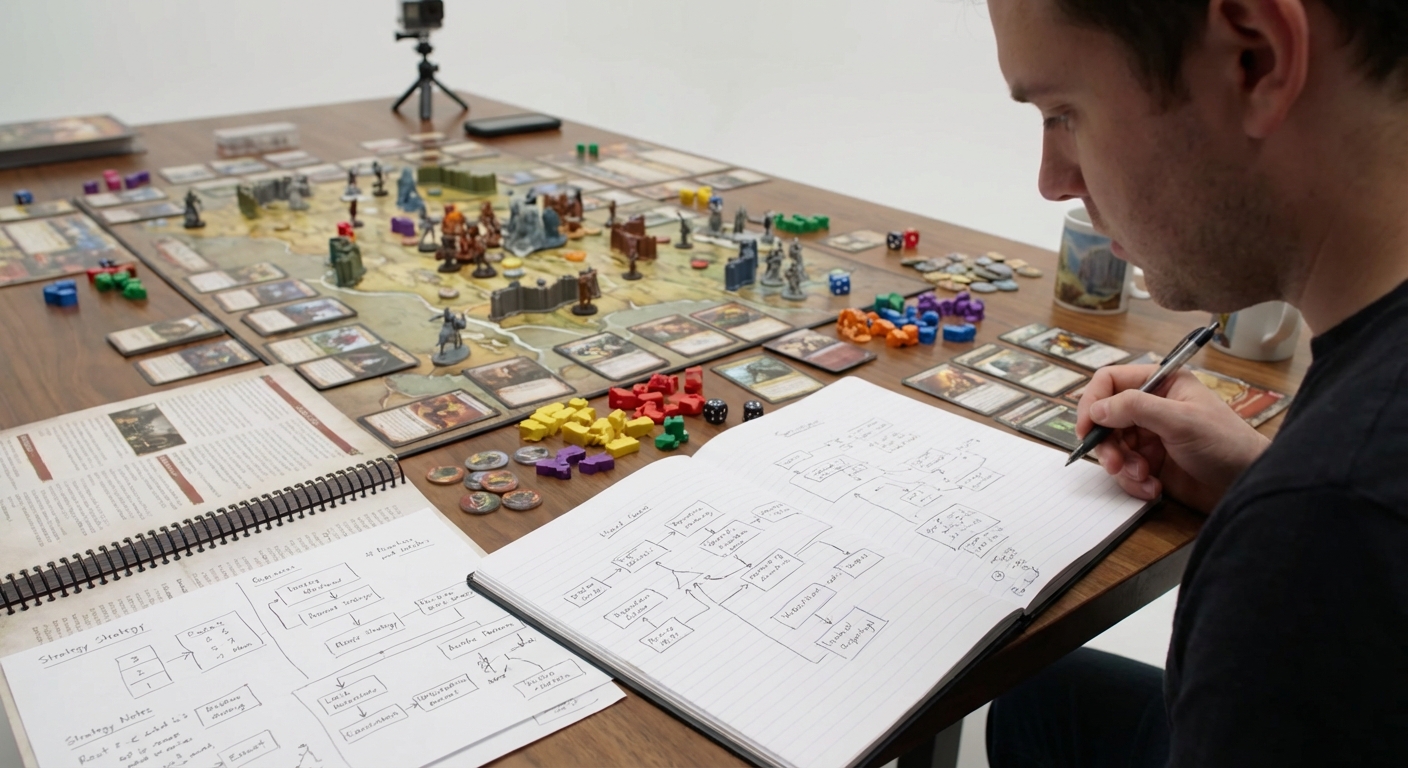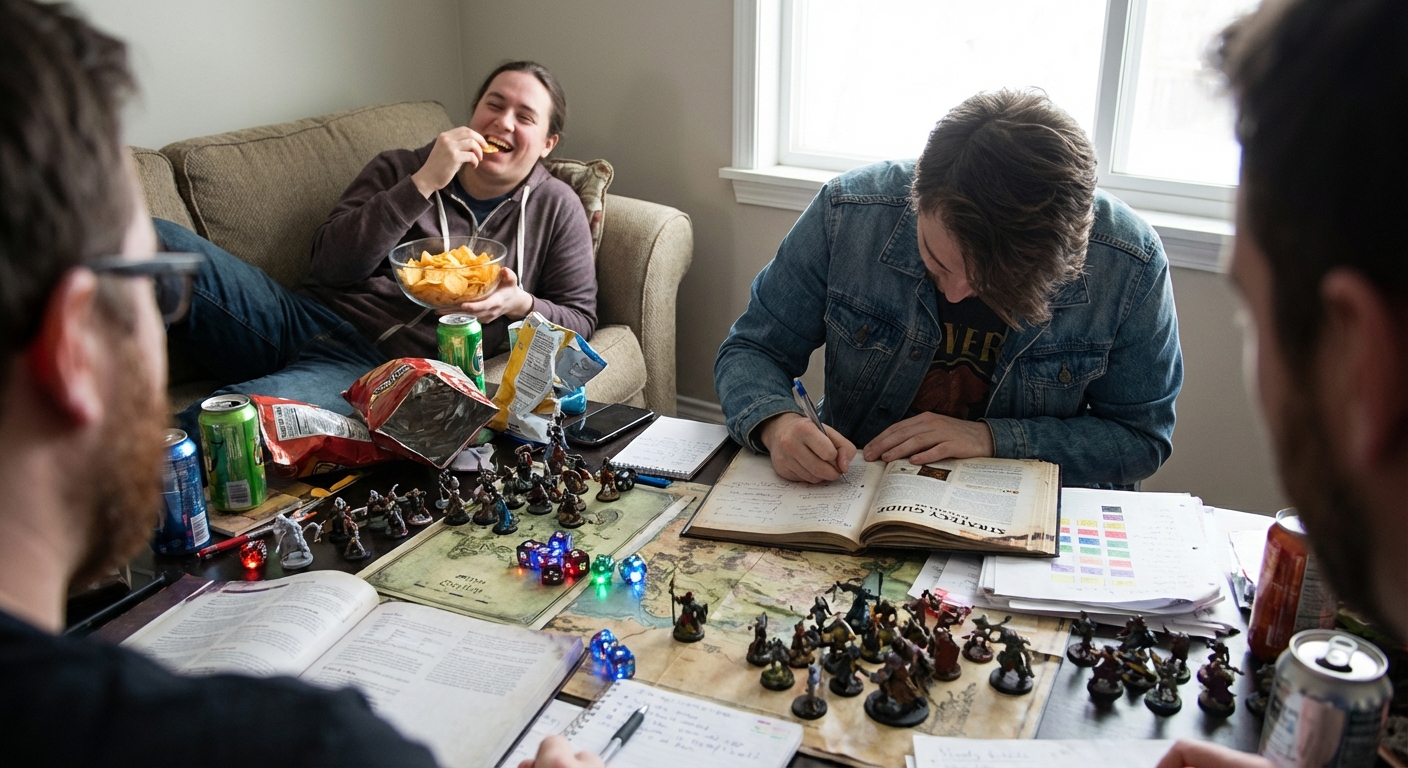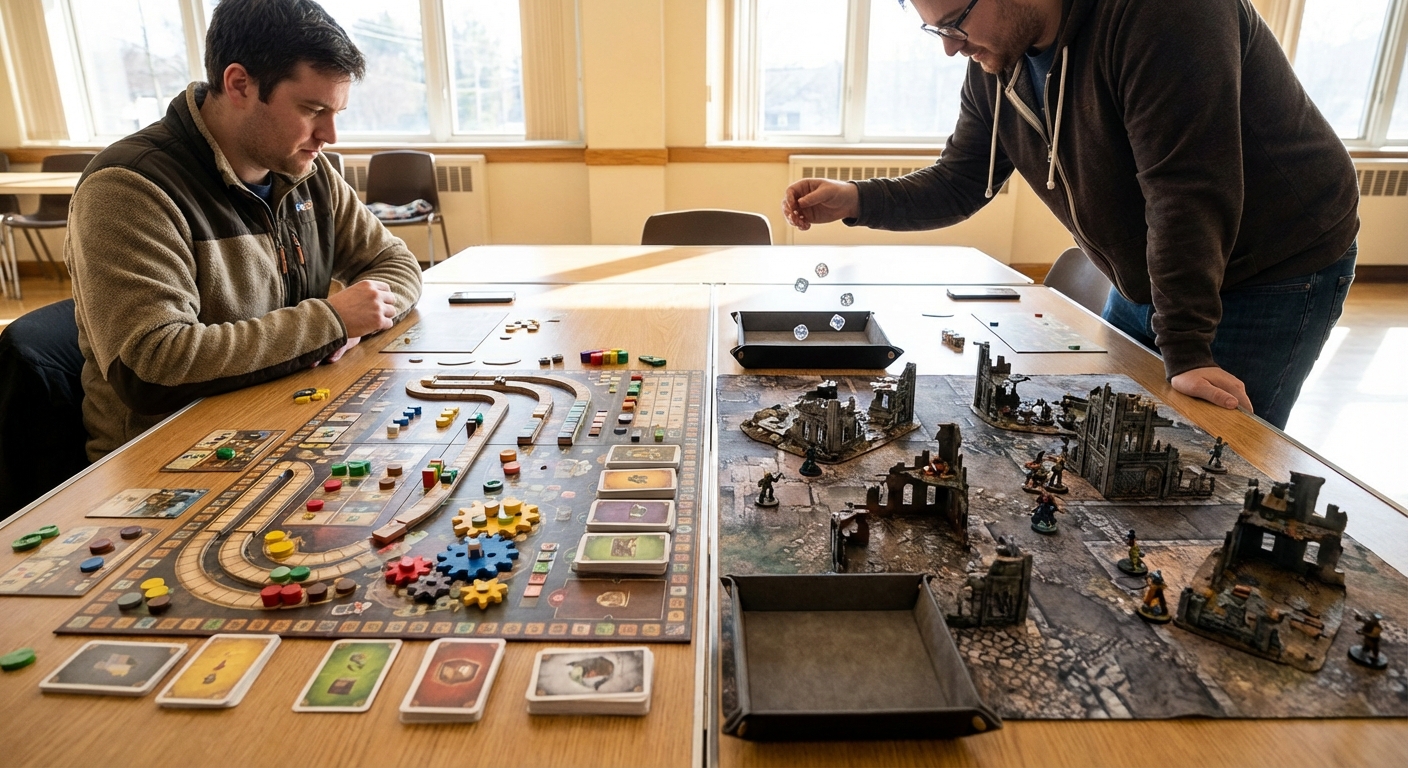
Board gamers love to argue about "tactical" vs "strategic" play, but strategy guides rarely spell out how different those games actually are to study.
Two Species of Strategy, One Hobby
On one side: heavy euro engine builders where long‑term planning rules. On the other: tactical knife‑fights where timing and table reads matter more than your long‑term spreadsheet.
If you’re a strategy‑guide junkie, understanding how advice changes between these two ecosystems is a power boost. Let’s dissect how euros and tactical games demand different kinds of guidance—and how you can exploit both.
Euro Engines: Strategy Guides for Long‑View Dominance
Think games in the vein of Terraforming Mars, Ark Nova, Great Western Trail, Underwater Cities. These are games where the core question is:
How do I build an engine that converts actions to points more efficiently than everyone else?
What Good Euro Strategy Guides Focus On
Economic Curves and Timing
- How quickly can you ramp income? - When should you stop building and start scoring? - Which cards/upgrades create exponential value versus linear gains?
Synergy Maps
The best euro guides show you what combos are worth building around: - Card A + Tile B turns mediocre actions into powerhouse turns. - Two weak techs that together form a scoring engine.
Breakpoints and Overbuild Traps
Euros love to tempt you with upgrades that don't pay off in time. Good guides say: - "This building is only worth it before round 3." - "This engine piece never amortizes at low player count."
Component Quality: Why It Matters More Than You Think
Euro engines are information‑dense. Component quality can either support or sabotage strategy:
- Clear iconography lets you spot synergies at a glance.
- Well‑organized player boards help track complex multi‑step engines.
- Decent card stock actually matters when you’re constantly handling key engine cards.
A sharp guide will mention if the game’s production hides crucial information:
- Faded icons you’ll forget to trigger
- Bonus symbols crammed into margins
Because if players aren’t seeing the system clearly, they aren’t playing strategically.
Pros & Cons of Strategy‑Forward Euros
Pros:
- Extremely rewarding for repeated study and guide‑driven improvement
- Strategy guides can dramatically shorten the “lost first play” problem
- Meta stays rich as you explore subtler lines
- High onboarding cost for new players
- Tendency toward "scripted" openings if guides become too dominant
- Analysis paralysis’s natural habitat
Cons:
Tactical Knife‑Fights: Strategy Guides for Chaos Control
Now think Blood Rage, Inis, Kemet, Cosmic Encounter, Root, or even modern interactive fillers. Here the question is different:
How do I turn imperfect information and messy board states into an edge?
These games don’t want your 10‑turn plan. They want your sharpest move right now.
What Good Tactical Strategy Guides Focus On
Heuristics, Not Scripts
Great tactical guides don’t say “Do X on turn 2.” They say things like: - “Never fight a battle you can’t afford to lose twice.” - “Threaten two opponents at once; attacking only one creates a kingmaker.”
Reading the Table
These guides lean hard into social and positional strategy: - How to look non‑threatening while quietly gaining advantage - When to strike the leader vs. quietly pass and let others fight
Card/Ability Evaluation Under Uncertainty
Tactical games revolve around flexible tools: - Cards that are mediocre alone but insane in narrow situations - Powers that shift dramatically with player count
Guides teach you not only what's "strong" but when and why.
Component Quality in Tactical Games
Here, components are about clarity and threat projection:
- Miniatures or standees should clearly show who threatens what.
- Board layout must make adjacency and reach obvious.
- Player screens or hidden information components need to be comfortable to use.
If the production obscures threat ranges or makes status effects hard to track, tactical play collapses. Good guides will often include table‑organization tips:
- Group units by threat type
- Use third‑party tokens to clarify control or buffs
Pros & Cons of Tactics‑Heavy Games
Pros:
- Strategy guides won’t “solve” the game—players and chaos keep it fresh
- Easier for new players to stay competitive with basic heuristics
- Big, cinematic moments that guides can help you set up
- Some players hate high chaos, regardless of how skillful the play can be
- Harder to translate advice into guaranteed win‑rate increases
- More dependent on group meta and play personalities
Cons:
How Strategy Advice Differs Between the Two
Let’s make it concrete.
In a Euro Engine Builder, Guides Will:
- Show you efficiency math (points per action, income over time)
- Offer sample build orders or "paths"
- Prioritize resource conversion chains
You’ll see phrases like:
- "Aim for at least 3 production before round 3."
- "Draft cards that share tags X and Y to leverage multipliers."
In a Tactical Battler, Guides Will:
- Offer positioning rules of thumb
- Teach threat evaluation and alliance dynamics
- Emphasize flexible tactics over rigid plans
You’ll see phrases like:
- "Never empty your hand; hold at least one surprise."
- "Avoid early dominance; being obvious leader is a death sentence."
How to Switch Gears as a Player
If you’re moving from euros to tactical games (or vice versa), adjust how you use guides:
Coming from Euros into Tactics
- Stop looking for build orders; look for principles.
- Ask: "How should I look on the board so I’m strong but not target number one?"
- Use guides to learn political timing, not fixed lines.
Coming from Tactical into Euros
- Stop expecting big swings from a single move; look for slow compounding edges.
- Ask: "What’s my long‑term conversion engine?"
- Use guides to learn critical economic thresholds and when to pivot.
Why You Need Both Types of Strategy Guides
Exclusively reading euro‑style guides will make you deadly in planned systems—but soft in interactive chaos. Living only in tactical advice leaves you underpowered in ruthlessly efficient engines.
If you want to be dangerous across your whole collection:
- Use euro guides to sharpen planning, math, and combo recognition.
- Use tactical guides to sharpen reading people, tempo, and threat management.
Same hobby, different muscles. Learn to flex both, and your shelf stops being "some games I’m good at" and becomes "a playground I own."