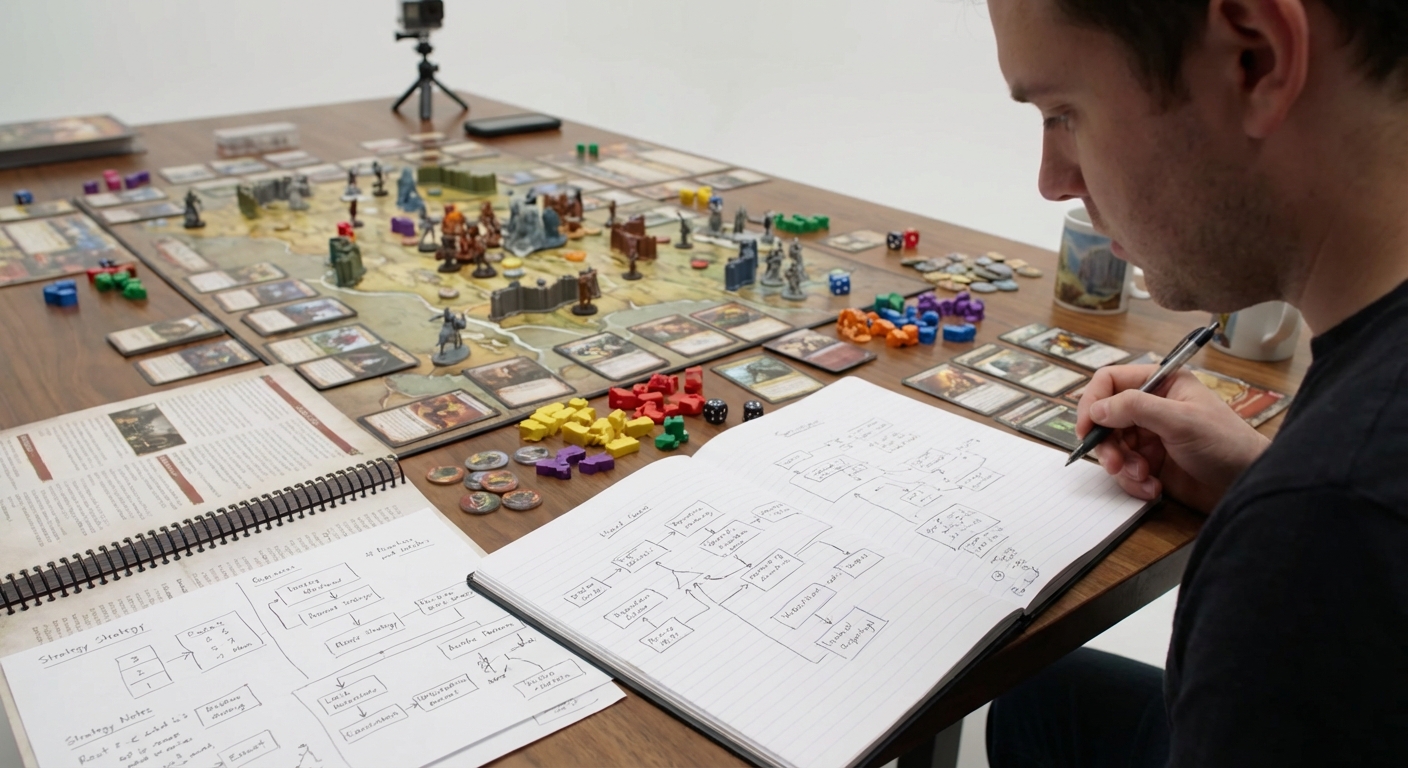
Strategy guides are the unofficial second rulebook of the hobby. The real game doesn’t start when you finish reading the rules; it starts when you understand why the rules are designed that way, and how to bend them to your will.
Why Every Serious Gamer Should Care About Strategy Guides
A well‑written strategy guide turns a solid game into an obsession. It shortens the learning curve, deepens your appreciation of design, and helps your group get to the "good part" of the meta faster—without hours of trial and error.
This isn’t about cheating or “solving” a game. It’s about:
- Surfacing underlying systems
- Highlighting common traps
- Teaching players how to make meaningful decisions earlier
Let’s break down how to analyze a game and translate that into a guide that’s actually worth reading.
Step 1: Dissect the Game’s Core Engine
Before you can write or truly use a strategy guide, you need to identify the engine of the game—the small set of systems that actually matter.
Ask these questions:
What generates points or victory conditions?
Is it area control, set collection, engine building, tempo, or something hybrid?
What are the key bottlenecks?
Limited worker spots, card draw, money, time/rounds, or physical space on the board?
Where is the tension?
Anywhere you feel torn between two strong options is a strategic hotspot worth covering.
Your guide should open with this structural overview. Treat it like the game’s X‑ray.
Example: In a medium‑heavy euro like Lorenzo il Magnifico, the real contest is about tempo and multipliers. Actions that look mediocre early can be game‑breaking if they unlock more actions or amplify scoring later.
Step 2: Identify Archetypes and Strategic Lanes
Good strategy guides don’t just list tips; they show play styles.
Define Strategic Archetypes
Most games support at least two or three main lanes:
- Economy First – Prioritize income or resource engines early, cash in late.
- Tempo/Aggression – Push the pace, deny opponents, force inefficient plays.
- Hybrid/Opportunist – Ride short‑term value, pivot to whatever scoring route is open.
Your guide should:
- Name these lanes
- Explain when each is viable
- Show how to transition between them
Highlight Synergies and Anti‑Synergies
Strategy guides get really useful when they go beyond “this is good” and move into:
- "This is only good if you already have X"
- "Don’t pair these two things; they compete for the same scarce resource"
That’s the difference between vague advice and actually winning more games.
Step 3: Early, Mid, and Late Game Playbooks
Great guides give players a timeline.
Break your strategy sections down into phases:
Early Game: Foundations
Cover:
- Opening priorities – Money? Cards? Board position?
- Common traps – Overbuilding, hoarding, or chasing points too soon
- Critical tempo decisions – Do you race to an early scoring target or stay flexible?
Mid Game: Leverage
Here you explain how to turn your position into momentum:
- Converting income into points efficiently
- Timing power moves (big turns, combos, scoring spikes)
- Reading opponents’ lanes and adjusting
Late Game: Conversion and Denial
This is where tight guides shine:
- How to turn leftover resources into max points
- When to pivot from engine building to pure scoring
- Endgame denial plays (blocking scoring spots, stealing majorities, closing the game early)
Step 4: Component Quality and UX: What Affects Strategic Clarity
A truly expert guide talks about components because they shape how the strategy is understood.
Good Component Design Helps Strategy
- Clear iconography means faster pattern recognition.
- Dual‑layer boards help track multi‑step engines and reduce misplays.
- Player aids that show scoring structure are basically built‑in mini‑strategy guides.
When Components Fight the Strategy
Call this out in your guide:
- Overproduced miniatures hiding important tokens
- Tiny scoring icons crammed into cluttered art
- Ambiguous symbols that make it hard to evaluate actions quickly
Honest comment on component UX helps readers understand why a game feels harder than it “should,” and how to compensate.
Step 5: Honest Pros and Cons of Strategy‑Heavy Games
Your strategy guide is the perfect place to tell players who this game is actually for.
Pros
- High skill ceiling – Rewards repeated play and meta development.
- Replayability – Different lanes and openings keep things fresh.
- Community depth – More potential for discussion, guides, and online meta.
Cons
- Punishing for new players – High knowledge gap can lead to blowouts.
- Analysis paralysis – Strategic richness can bog down turns.
- Teach burden – You may need a “training wheels” strategy to keep newbies engaged.
Be opinionated. If a game snowballs brutally from early mistakes, say that. Then give readers tools to soften the blow for new players.
Turning Your Insights into a Readable Guide
Now that you know what to look for, shape your strategy guide like this:
- Overview & Core Engine – What matters and why.
- Archetypes – Named strategies with clear pros/cons.
- Phase‑by‑Phase Playbook – Early, mid, late game.
- Component Notes – How production helps or hinders mastery.
- Matchup & Player Count Notes – How the game shifts at 2 vs 4 players.
- Common Mistakes – The “stop doing this” section everyone secretly needs.
- Advanced Tricks – Sequencing, denial plays, weird edge cases.
Keep the tone sharp, specific, and fun. No one needs a 2,000‑word essay that boils down to “try to get points.”
Final Thoughts: Strategy Guides as Meta‑Fuel
Strategy guides don’t kill discovery; they accelerate it. They give your group a shared language, a starting point, and a higher baseline of competence.
If you’re a dedicated board gamer, treat good guides as part of the hobby toolkit—right next to your card sleeves and upgraded metal coins. And if you’re ready to level up the games you love, start writing your own guides. You’ll never look at a rulebook the same way again.